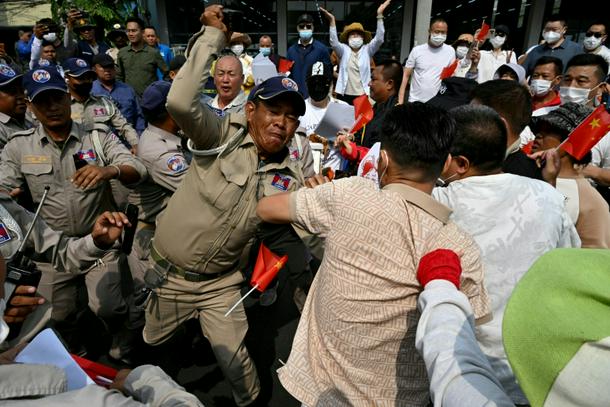
Chinese and Cambodian nationals believed to be Huione Pay creditors clash with police during a protest demanding their accounts be unfrozen, in Phnom Penh in April
Phnom Penh (AFP) - A cousin of Cambodian Prime Minister Hun Manet said Wednesday he had owned a 30 percent stake in a digital payments platform linked to cyberscams and money laundering and sanctioned by Washington.
The former chairman of Huione Group, the entity that owned the platform in question, was extradited last month to China, where authorities accused him of multiple crimes over his alleged key role in a major transnational gambling and fraud syndicate.
Businessman Hun To, a member of the family that has ruled Cambodia for four decades, said he had “owned 30 percent of shares” in Huione Pay, responding in a statement to what he called accusations of “being the boss” of the firm.
Hun To, who was previously listed as a company director on the commerce ministry’s online business registry, added that he did not manage the platform’s operations and “never received any profits, dividends or assets” from it.
The US government last year accused Huione Group, which owned several companies offering e-commerce, payment and cryptocurrency exchange services, of laundering funds for transnational criminal groups perpetrating internet scams from Southeast Asia.
Since last month, protesters have demanded the unfreezing of their accounts with the Huione platform H-Pay, previously Huione Pay, which they said have been inaccessible since December following its liquidation.
Organised crime expert Lindsey Kennedy said Hun To was unlikely to face any serious consequences in Cambodia.
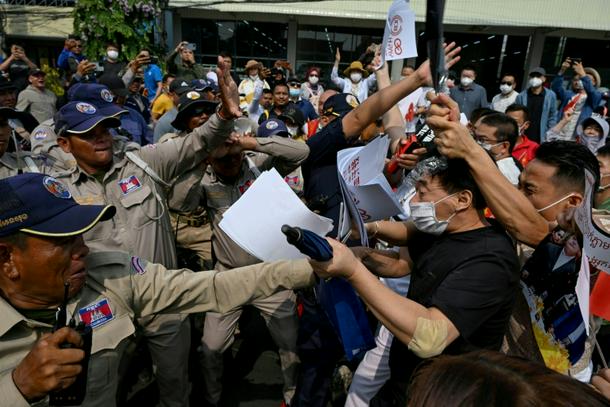
Since last month, protesters have demanded the unfreezing of their accounts with the Huione platform H-Pay, previously Huione Pay, which they said have been inaccessible since December
“I doubt there is any chance of him ever facing criminal investigation in Cambodia itself, especially while his uncle Hun Sen is still alive,” she said, referring to the former long-time leader who is the father of the current prime minister and remains an influential figure in national politics.
“Hun To has been listed as a director or shareholder of countless criminally exposed companies”, including several tied to scams, human trafficking, money laundering and other crimes, Kennedy added.
Huione’s former chairman, Li Xiong, owned 62 percent of Huione Pay’s shares and the company was liquidated in October, according to a report by liquidator Reachs & Partners.
Huione Pay had a net cash balance of more than $1.1 million after all creditors were paid, and the remaining funds were distributed to “actual shareholders responsible for the company’s past operations”, the liquidator said.
Hun To said he received “no share of the remaining money after the liquidation”.
The National Bank of Cambodia has said the Huione platforms’ business licences have been revoked, and creditors of H-Pay can make claims with the liquidator.
- Scam hotspot -
The US Treasury’s Financial Crimes Enforcement Network (FinCEN) designated Phnom Penh-based Huione Group a “primary money-laundering concern” last year, and prohibited US financial institutions from processing transactions with it.
FinCEN said the conglomerate had received at least $4 billion worth of illegal proceeds between August 2021 and January 2025. That included proceeds from scams, stolen funds and illicit cyber actors.
Beijing has called former Huione chairman Li “a core member” of the criminal gang of Chen Zhi, another Chinese-born accused scam boss who was operating from Cambodia before being extradited to China this year.
Cambodia has emerged as a hub for the transnational scam industry in recent years, with organised crime groups stealing tens of billions of dollars annually from victims around the world.
Scammers – some willing, others trafficked – operate fake romantic relationships and cryptocurrency investment schemes from casinos, hotels and fortified compounds.
Cambodian authorities say they are cracking down, detaining and deporting more than 13,000 foreign nationals involved in online scams since early last year.
Observers say the law enforcement actions followed pressure from China and the United States.
Monitors have also accused senior Cambodian officials of complicity – allegations the government has denied.
Kennedy, research director of The Eyewitness Project, said “the highest echelons of the government facilitated, protected and profited from the scam compounds”, but few bosses and no “political elites known to be involved” have been detained.
In recent months, authorities have announced charges against several police and immigration officials accused of involvement with cyberscams.
But, according to Kennedy, “those truly responsible are not facing any consequences”.