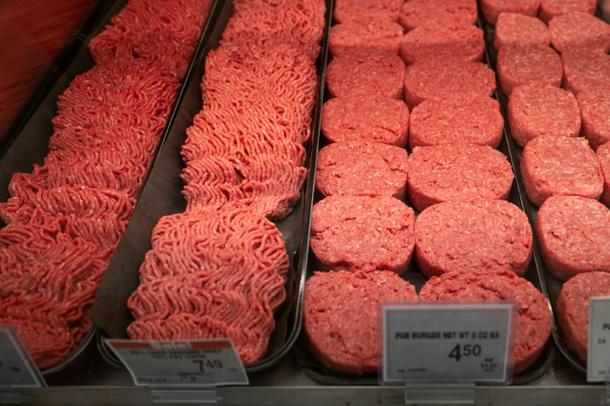
Steeper beef prices have become a symbol of high living costs in the world's biggest economy, pressing the Trump administration to take steps to bring costs down
Washington (United States) (AFP) - President Donald Trump announced Friday that the United States would temporarily allow a greater volume of foreign beef imports, in his latest bid to lower costs for American consumers as midterm elections approach.
The US cattle herd has shrunk to its smallest size since the 1950s – in part due to drought and international competition – with the diminishing numbers pushing beef product prices higher.
“As we work to rebuild this herd and help our ranchers, for the next 90 days, the United States will allow up to 300,000 metric tons of product for ground beef to be imported with no out of quota tariff,” Trump wrote on his Truth Social platform.
The US president did not say which countries would be exporting the beef but added there was a commitment to sell it at 25 percent below market prices.
Steeper beef prices have become a symbol of high living costs in the world’s biggest economy, pressing the Trump administration to take steps to bring costs down.
Affordability will be a key issue in November’s midterm elections, where Democrats are seeking to wrest control of both houses of Congress from Trump’s Republicans.
- ‘Disappointed’ -
US cattle and rancher groups have been resistant to importing more beef. Responding to the move, Senator Deb Fischer of Nebraska, a major beef-producing state, said she was “extremely disappointed.”
“We all want lower grocery prices, but as I’ve said for months, we cannot do it at the expense of American producers. Flooding the market with foreign beef hurts our livestock industry,” said Fischer, a Republican.
The National Cattlemen’s Beef Association, a trade group, was similarly downbeat.
“Flooding the market with government-subsidized, below-market beef is not the way to rebuild the American cattle herd,” CEO Colin Woodall said. “Today’s announcement and other market interventions throw cold water on the prospect of herd expansion and sacrifices long-term stability for short-term messaging.”
Responding to the criticism later in the day, Trump offered no details on how the plan would work but insisted he would get beef prices down because “that’s what the voters want, and that’s what I want.”
Last fall, Trump demanded ranchers slash their prices, and he later moved to expand imports of beef trimmings from Argentina to cool ground beef prices.
He has also launched an investigation into the meatpacking industry over the high prices of red meat.
His latest effort comes as American households struggle with stubborn inflation, fueled by an energy crisis linked to the war on Iran.
Trump launched the war alongside ally Israel in late February, with Tehran’s retaliatory action virtually blocking the Strait of Hormuz, a vital energy and fertilizer supply route.
This has pushed up fuel, transportation and food costs.
Despite higher beef prices, US consumer demand for meat remains robust.
The US Department of Agriculture estimates total beef consumption this year will hit 29.4 billion pounds, an uptick from 2025.
The American Farm Bureau Federation warned in May, however, that Americans are consuming more beef than US farmers and ranchers can supply.
It added that ranchers need to rebuild the US cattle herd – or demand would have to cool – in order for beef prices to fall.
Yet “cattle producers still face substantial uncertainty that clouds herd rebuilding decisions,” wrote Bernt Nelson, an economist at the federation.
These include threats to animal health, including the New World screwworm, a flesh-eating parasite.